

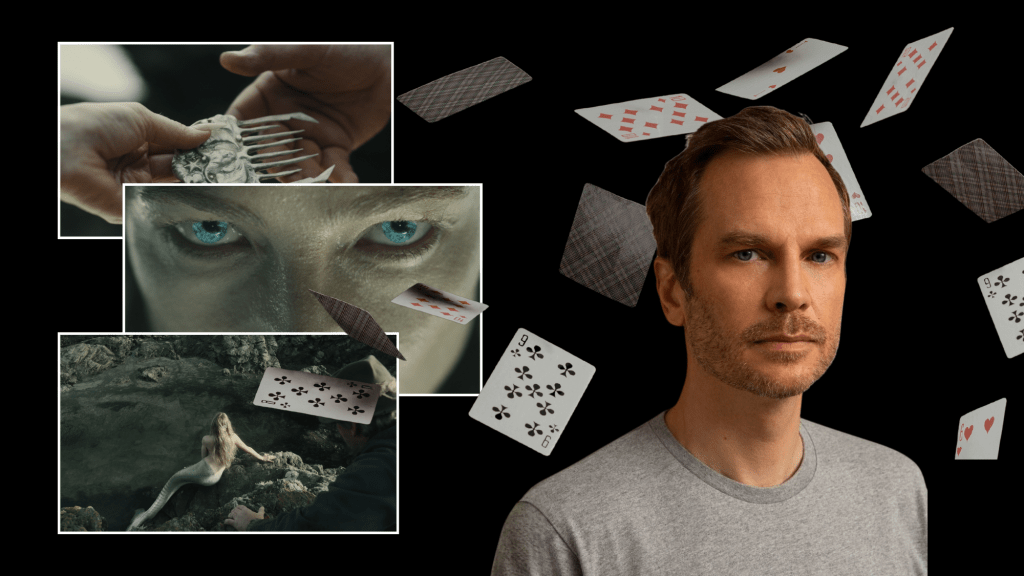
We spoke with magician and filmmaker Ali Cook about the magic of movies. On a storytelling level, he believes that all filmmakers can learn from the simple set up of a magic trick.
Act One:
For Ali, the beginning of a magic trick and the beginning of a film scene are made with the same ingredients. As he puts it: “It’s the secret to being a good storyteller, a good magician, and a good comedian… it certainly helps to understand scenes as an actor.” In magic, act one is the moment the magician invites you to “take a card”. In film, this is where tone, character and rules are introduced. Ali believes this is also where foreshadowing must be planted, because “a great joke is when someone gives you two elements, and then they’re connected in a way you couldn’t possibly imagine.
Act Two:
Act two is where both magic and film tighten their grip on the audience. In a trick, this is when the card is “lost in the deck” or placed under impossible conditions. Misdirection, suspense and emotional shifts all belong here. Ali sees this as identical to the middle of a film scene, where tension escalates and the audience begins to question what they think they know. This act is also where humour becomes a tool: “A little bit of humour allows you to break the tension so you can rebuild it again.”
Act Three:
For Ali, the final act of a film and the climax of a trick share the same goal: a payoff that feels both surprising and inevitable. “A magic trick is… act one, take a card. Act two, lose it in the deck. Act three, against impossible conditions, I’ll find it.” He believes the strongest endings combine suspense with surprise: “There’s only two types of magic trick, a suspense magic trick or a surprise magic trick. And the absolute killer is a suspense magic trick with a surprise.” This is where foreshadowing pays off.
The full article will be published in August, 2026. It will include more advice from the Oscar-shortlisted filmmaker so be sure to register your interest!

 Prequel Magazine